Table of Contents
A personal Note
Today, 12 February, is important in my life for two reasons. First, it is my brothers birthday. He was born on February 12th. But it is important for another reason. Today is the anniversary of the day Immanuel Kant died. Today is the anniversary of day that Immanuel Kant arrived in the court of Sheol.
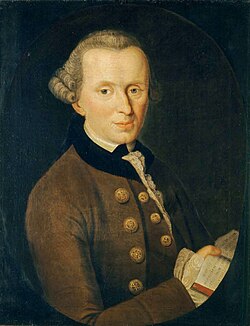
But before I tell you what happened when Immanuel faced the lord, I am going to tell you a little bit about what parts of the Kantian tradition are relevant to this project, and the roll of truth in this project.
In the second video, you probably noticed that the strange man from the bedroom was Immanuel Kant giving a lecture on transcendental Idealism. I included this for a number of reasons.
First, it is funny because Immanuel Kant’s first name is Immanuel which is the name that Isaiah foretold The Son of Man to have. I deal with this names application to me in my third post here. Featuring Kant also is just funny because it allows for me to deal with the “your not Immanuel” objection to my claim of being The Son of Man by making Immanuel Kant jokes.
Second, it is useful to get at the idea of intersubjectively verifiable empirical data being used to verify a theoretical concept. I chose this as a standard because it sets the bar really high. I did not choose this because I buy into the transcendental idealism that Kant argues for. In fact given that Schelling’s philosophy is a key component of my claim, it would be incorrect for me to say that the Kantian version transcendental idealism is correct. But I do believe that everyone who is worth taking seriously, all be it for different reasons, can agree that if you have a concept and verify it using sense-observation, then you can conclude that the concept really exists. You can say you know that it exists.
Traditionally, the main issue with proving God exists is that God as He is commonly conceptualized is supersensible or beyond sensation. Therefore, if we conceptualize Him this way then there would be no way to verify the concept of him. The concepts is possible and cannot be disproven by this approach, but it also cannot be proven. This something Kant understood when he wrote:
(Kant, Critique of Pure Reason, A638/B666)Thus from this one can very well see that transcendental questions admit only of transcendental answers, i.e., answers from pure a priori concepts, without the least empirical admixture. But here the question is obviously synthetic and demands an extension of our cognition beyond all the boundaries of experience, namely to the existence of a being that is supposed to correspond to our mere idea, to which no experience can ever be equal. Now, according to the proof we have given above, all synthetic cognition a priori is possible only by the fact that it expresses the formal conditions of a possible experience, and all principles are therefore only of immanent validity, i.e., they are related solely to objects of empirical cognition, or appearances. Thus through transcendental procedures aiming at a theology of mere speculative reason nothing is accomplished.
This problem is one that my proof, if I may call it that, completely avoids. It avoids them by looking for empirical facts. It then uses naive sounding literal interpretations of various pieces of revealed religion form a concept of God that is possible to observe. It then presents evidence of the observation. This leads to my conclusion. If you watch carefully you will notice that this conclusion is largely left unstated. The only time it is explicitly stated in the videos is in passing in the Introduction to Part 4. This was in an effort to get the viewers to make the inference themselves with out it being clearly and directly told it. It is the opposite case here on this website. The goal I have here is to explicitly state it
In some sense, my projects form is actually scientific. I had a hypothesis that someone alive was God. I then experimented through observation. I then reformulated my concept of God to be not dependent on me as an observer but still observable. My main rule for qualifying prophecies was the prophet must not only be that the have never meet me, but that they must have died before I was born. I then went out found that there are a number of prophets that wrote prophesies that could apply to me and are empirically verifiable and died before me. The joke is the way that I did not realize that they apply to me. This joke is the root of the not real portion of my videos because the truth is that it was clearly stated multiple times in school but they never told me why, and it is not super obvious if you were raised by atheists. The real path I took to discovering that truth was dark and sad and few would want to watch a movie of it. But I think that there are usually more than one way to solve a problem. And if the conclusions good why should you say it is wrong to take one path but not the other.

 The Word